
OWCP Injury Claims Documentation Requirements in Denver
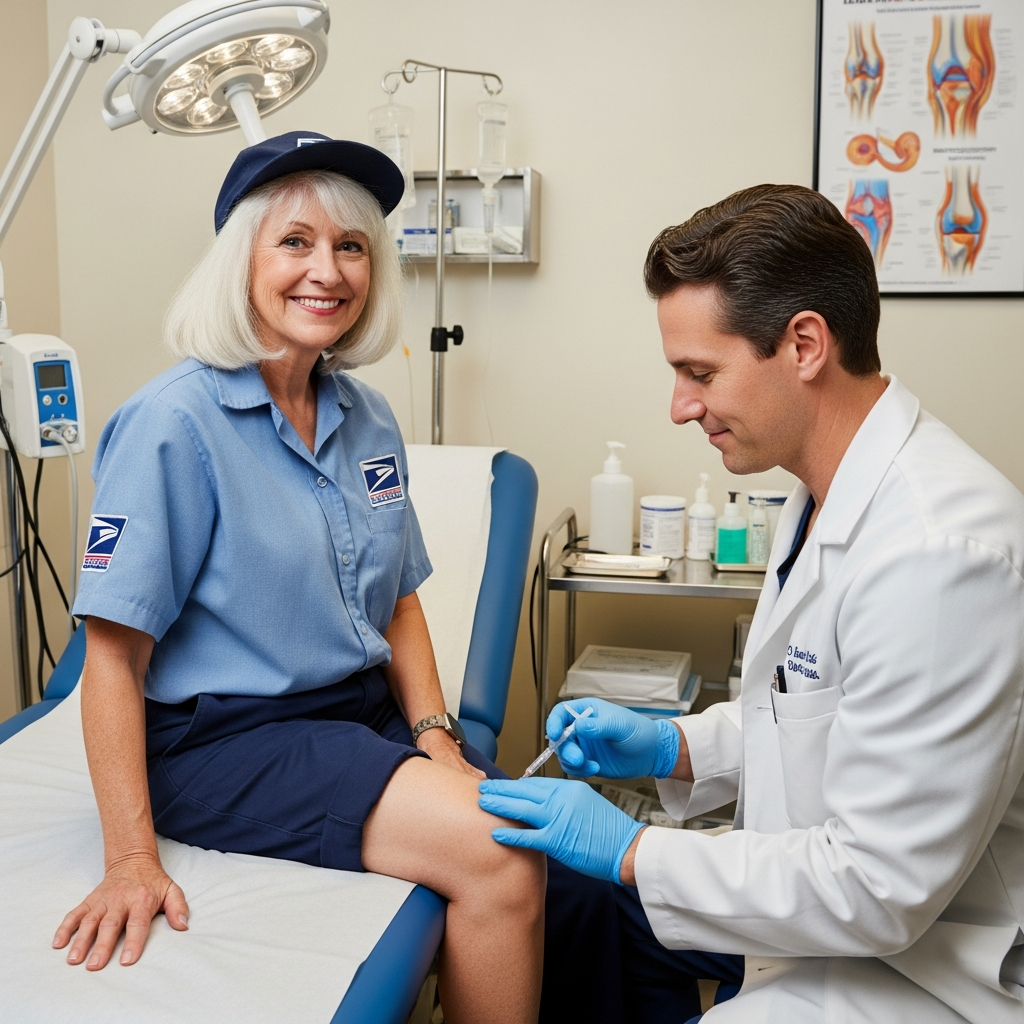
Picture this: you’re a federal employee working in Denver – maybe at the VA medical center, the federal courthouse, or one of the postal facilities scattered across the metro area – and you hurt yourself on the job. Maybe it’s a back injury from lifting something heavy, or a slip on an icy loading dock in January (and if you’ve spent any time in Denver winters, you know exactly how treacherous those can get). You report the injury, you see a doctor, and then someone hands you a stack of paperwork and says, essentially, “good luck.”
That stack of paperwork? That’s the Office of Workers’ Compensation Programs system. And for a lot of people, it’s where their claim quietly dies.
Here’s the thing nobody tells you upfront: getting injured is only the first obstacle. The real challenge – the one that catches federal workers completely off guard – is proving it. Documenting it. Following a very specific set of rules that, if you miss even one, can result in your claim being delayed, reduced, or denied outright. We’re not talking about minor inconveniences here. We’re talking about lost wages, unpaid medical bills, and sometimes years of unnecessary suffering while you wait for a system to recognize what happened to you.
And that’s not dramatic. That’s just the reality of how OWCP claims work.
Why Denver Federal Workers Are in a Unique Position
Denver is a hub for federal employment – there are tens of thousands of federal workers along the Front Range, from federal law enforcement to TSA agents at DIA to postal workers to employees at the Denver Federal Center in Lakewood. Which means there are also tens of thousands of people who could, at any point, find themselves navigating this process. Probably more than you’d think are dealing with it right now.
The tricky part is that OWCP documentation requirements aren’t exactly common knowledge. They’re not the kind of thing covered in your new employee orientation. Most people learn about them the hard way… which is to say, after they’ve already made a mistake that costs them.
There’s also a local dimension worth mentioning. Colorado has its own medical provider networks, its own timeline quirks, and specific nuances around how injuries get reported within Denver-area federal facilities. What worked for your coworker who filed a claim in another state might not translate directly to your situation here. Details matter enormously.
What Actually Happens When Documentation Falls Short
Here’s a scenario that plays out more often than it should: a federal employee gets hurt, reports it to their supervisor, sees a doctor once, and assumes the system will take care of the rest. A few weeks later, they get a letter from the Department of Labor questioning the medical evidence. Then another letter asking for additional documentation. Meanwhile, they’re still hurting, still missing work, and suddenly managing a part-time job’s worth of correspondence with a federal agency while also trying to recover.
It’s exhausting. It’s demoralizing. And in many cases, it was completely preventable.
The documentation piece – understanding exactly what OWCP needs, when they need it, and in what format – can mean the difference between a straightforward claim approval and a multi-month nightmare of appeals and resubmissions.
Here’s What We’re Going to Walk You Through
This article is designed to be the resource you wish someone had handed you before all of this started. We’re going to cover the core documentation requirements for OWCP injury claims in Denver, including the forms you absolutely cannot skip, the medical evidence standards the Department of Labor actually uses to evaluate your claim, and the timelines that matter more than most people realize.
We’ll also get into some of the common mistakes that derail otherwise legitimate claims – because knowing what *not* to do is just as valuable as knowing what to do – and talk about what options you have if your claim hits a wall.
You don’t need to become a bureaucracy expert to protect yourself. But you do need to understand the basics, and you need to understand them before something goes wrong. Because trying to figure this out reactively, after a denial letter has already arrived? That’s a much harder road than getting it right the first time.
So let’s get into it.
What OWCP Actually Is (And Why It Works Differently Than You’d Expect)
If you’ve ever dealt with a regular workers’ comp claim through a private employer, you might think you already know how this works. You don’t. Not exactly, anyway. The Office of Workers’ Compensation Programs is a federal system – run by the Department of Labor – and it operates under its own rules, its own timelines, and its own particular brand of bureaucratic logic.
Think of it this way: private workers’ comp is like your neighborhood diner. You more or less know what to expect, the menu is familiar, and even if service is slow, you can navigate it. OWCP is like that same diner, except it’s been franchised by the federal government, the menu is 200 pages long, and half the items have special ordering procedures that nobody told you about.
It covers federal civilian employees – postal workers, VA employees, federal contractors in certain situations, and many others – who get hurt on the job. If you’re working for a federal agency and you’re here in Denver, OWCP is your system. Full stop.
The Three Programs You Need to Know About
Here’s where it gets a little complicated, and honestly, a lot of people don’t realize this upfront. OWCP isn’t one program – it’s actually three separate programs under one umbrella, and which one applies to you depends entirely on what kind of work you do and how you were injured.
FECA – the Federal Employees’ Compensation Act – is the big one. This covers most federal civilian employees for traumatic injuries and occupational diseases. If you work for USPS or a federal agency and you got hurt, this is almost certainly your program.
Then there’s DEEOIC (the Energy Employees Occupational Illness Compensation Program) for workers in the nuclear weapons industry, and BLBA for coal miners dealing with black lung. Those are more specialized, and if you’re reading this in Denver specifically, FECA is probably what brought you here.
Why does this matter for documentation? Because each program has different forms, different deadlines, and different evidence standards. Getting your paperwork into the wrong lane is… not fun.
The Documentation Burden – And Why It Falls on You
This is the part that catches people off guard. In most medical situations, your doctor handles the heavy lifting. They send notes, they bill insurance, things mostly flow without you becoming a paperwork expert. OWCP doesn’t quite work like that.
The burden of proof in a federal workers’ comp claim sits with you, the employee. That means you’re responsible for establishing – with actual documentation – that your injury happened at work, that it’s causally connected to your job duties, and that the medical treatment you’re receiving is appropriate and necessary. Your doctor’s role is huge, but they need to document things in very specific ways for OWCP to accept it.
Here’s an analogy that might help. Imagine you’re building a legal case, not just filing an insurance claim. You need evidence, testimony (in the form of medical reports), and a clear chain of events. A doctor saying “yeah, this person’s back hurts” isn’t enough. OWCP wants to know *how* the injury happened, *why* the treatment is medically necessary, and *what* the expected trajectory looks like. That level of specificity takes intentional documentation from day one.
Timelines That Are Genuinely Unforgiving
One thing that trips up a lot of people – and this is counterintuitive if you’re used to private insurance – is how seriously OWCP takes its deadlines. A traumatic injury needs to be reported to your supervisor and a Form CA-1 filed ideally within 30 days. You technically have up to three years to file a claim, but waiting creates problems. Evidence gets fuzzy, memories fade, and OWCP will absolutely use gaps in documentation against you.
Occupational disease claims through Form CA-2 have their own timeline triggers based on when you knew – or reasonably should have known – about the condition.
Denver’s federal workers are spread across a lot of agencies and job types, which means the specific circumstances can vary quite a bit. But the underlying principle stays constant: document early, document specifically, and never assume something is obvious just because it seems obvious to you. OWCP reviewers aren’t there when the accident happens. Your paperwork is all they have.
Start a Paper Trail Before You Think You Need One
Here’s something most federal employees don’t realize until it’s too late – the moment you feel that pop in your knee, strain your back lifting a package, or notice that nagging wrist pain that won’t quit, your documentation clock starts ticking. Don’t wait until you’ve filed anything. Start writing things down that same day, even if it’s just a note in your phone. Date, time, what happened, who was nearby, what you were doing. Sounds excessive? It’s not. OWCP reviewers in Denver are looking for a consistent, coherent story, and your memory six weeks from now won’t be as sharp as it is today.
A cheap spiral notebook kept specifically for this purpose works better than you’d think. It feels old-fashioned, but a handwritten log with dated entries carries surprising weight because it’s hard to fabricate convincingly after the fact.
Get to a Doctor – and Say the Right Things
This is where a lot of legitimate claims fall apart. You go to an urgent care in Denver, the provider asks what happened, you say “I hurt my back” and move on. That’s not enough. You need to explicitly state that the injury happened at work, connect it to a specific activity or incident, and make sure the provider documents that connection in their notes.
OWCP operates on a principle called the “mechanism of injury” – basically, how did the work cause the harm? If your medical records just say “lumbar strain” with no mention of occupational cause, you’ve got a gap in your claim that a claims examiner will absolutely notice.
Ask your provider to include the phrase “work-related” or “occupationally caused” in their documentation. It sounds like a small thing. It isn’t.
The CA-1 vs. CA-2 Question (Get This Right)
Denver federal employees often file the wrong form, which creates delays that can stretch on for months. Quick breakdown
– CA-1 is for traumatic injuries – something that happened on a specific date, during a specific shift – CA-2 is for occupational disease – conditions that developed over time, like repetitive stress injuries, hearing loss from chronic noise exposure, or respiratory issues
Filing a CA-2 for something that should be a CA-1 isn’t just a paperwork headache. It changes your entitlement dates, affects your continuation of pay eligibility, and can complicate everything downstream. If you’re genuinely unsure which form applies to you, talk to a union rep or an OWCP specialist before you submit anything.
Your Supervisor’s Form Matters More Than People Think
Form CA-1 requires your supervisor to complete their portion – and honestly, this is where claims get quietly undermined. A supervisor who writes something vague, skeptical, or contradictory to your account creates a discrepancy that OWCP will flag. You can’t control what they write, but you can make sure they have the accurate facts before they write anything.
Have a direct, documented conversation. Email works well here because it creates a record. Something like: “I wanted to confirm the details of my work injury so your report is accurate…” and then lay out what happened clearly. It protects both of you, actually.
Denver-Specific: Know Your OWCP District Office
The district office handling most Denver federal employee claims is the Denver OWCP District Office at 1999 Broadway – though always verify current contact information since these things shift. Response times, documentation preferences, and even the specific examiners’ tendencies vary by district. Some district offices are notoriously detail-oriented about medical narrative reports. Denver tends to look carefully at the physician’s rationality – meaning your doctor needs to actually explain *why* your work caused or aggravated your condition, not just state that it did.
A one-line note saying “injury work-related” from your physician often isn’t enough here. A solid narrative report connecting your job duties to your diagnosis? That’s what moves a claim forward.
Keep Copies of Absolutely Everything
This feels obvious until you’re the person who didn’t do it. Every form you submit, every medical record, every piece of correspondence – scan it, photograph it, store it somewhere your employer doesn’t control. Claims get lost. Offices lose fax transmissions. Having your own complete file means you’re never starting from zero if something goes sideways.
A Google Drive folder organized by date costs nothing and has saved more than a few claims from completely unraveling.
When the Paperwork Fights Back
Let’s be honest – filing an OWCP claim in Denver isn’t exactly a walk in the park. Even people who do everything “right” hit walls. And when you’re already dealing with a work injury, the last thing you need is a bureaucratic maze standing between you and your benefits. So let’s talk about what actually trips people up, because knowing the pitfalls ahead of time changes everything.
The Deadline Problem Nobody Warns You About
Here’s where a lot of claims fall apart before they even get started. OWCP has strict filing windows, and they’re not forgiving. You have three years from the date of injury to file a traumatic injury claim – but the tricky part is that many people miss the earlier, more critical deadline: notifying your supervisor within 30 days. That window is short, especially when you’re hoping the injury will just… get better on its own.
The solution isn’t complicated, but it requires you to act before you feel ready. Even if you’re not sure your injury is “serious enough,” document it immediately. Tell your supervisor in writing. Send an email so there’s a timestamp. You can always decide later not to pursue a claim – but you can’t go back and create documentation that didn’t exist.
Your Medical Records Don’t Tell the Right Story
This one is genuinely frustrating, and it’s not your fault. Standard medical notes are written for clinical purposes – they describe what a doctor observed and treated. They’re not written to satisfy OWCP’s very specific requirement that your injury be directly connected to your work duties.
A note that says “patient has lower back pain” is almost useless for your claim. A note that says “patient presents with lumbar strain consistent with repetitive lifting of 50+ pound packages during postal duties” – that’s what moves things forward.
The real solution here is to be specific with your doctor. Bring a written description of your job duties to your appointment. Describe exactly what you were doing when you were injured. Ask your provider to document the connection explicitly. Most physicians aren’t trying to be unhelpful – they just don’t know what OWCP needs unless you tell them.
The “It Was a Pre-Existing Condition” Roadblock
A lot of Denver federal workers get denied or delayed because OWCP questions whether their injury was truly work-related – or whether it aggravated something that already existed. This is one of the most discouraging denials to receive, because it can feel like you’re being accused of something.
Here’s what you need to understand: aggravation of a pre-existing condition is still compensable. If your work made an existing problem significantly worse, that counts. The burden is on you and your medical provider to document how and why the work activities contributed to your current condition. This is exactly the kind of nuanced medical narrative that a physician who understands OWCP documentation can write – and most general practitioners simply won’t think to do it unprompted.
Dealing with Delays (And Not Losing Your Mind)
OWCP claims take time. Sometimes a lot of time. Claims can sit without movement for weeks, and it’s incredibly stressful when you have bills piling up and you’re not sure what’s happening on the other end.
What actually helps? First, keep a paper trail of every single thing you submit – dates, forms, tracking numbers if you’re mailing anything. Second, know that you can follow up. OWCP has a district office in Denver, and your claim isn’t a black hole. Third – and this is the one people skip – consider working with a medical provider who regularly treats federal workers under OWCP. They know how to code visits correctly, how to write the supporting documentation, and frankly, they’ve seen what gets claims approved.
When Your Claim Gets Denied
A denial feels final. It’s not. You have the right to request reconsideration within one year of the denial decision, or to appeal to the Employees’ Compensation Appeals Board. The key is understanding *why* you were denied, because that tells you exactly what evidence is missing.
Sometimes the fix is as simple as getting a stronger letter of medical necessity. Sometimes it’s more involved. Either way, a denial is a direction, not a dead end. Don’t let the paperwork win just because round one went badly.
What to Expect After You Submit Your Documentation
Let’s be honest with you here – the OWCP process is not fast. If you’re expecting a quick turnaround, that hope is going to collide pretty hard with reality. Most claimants in Denver are looking at weeks to months before they see meaningful movement on their case, and that’s completely normal. Frustrating, yes. But normal.
After you submit your initial documentation package, your claim gets assigned to a claims examiner. That person is likely managing a significant caseload. They’re not ignoring you – they’re working through a queue. Your first real milestone is receiving a case number confirmation, which typically happens within a week or two. Write that number down. Put it everywhere. You’ll need it every single time you contact the Office of Workers’ Compensation Programs.
The Timeline Nobody Wants to Hear
Here’s a rough sense of how things tend to unfold, though every case has its own quirks…
The initial review period usually takes 30 to 45 days for straightforward claims. If your paperwork is complete, your medical documentation is clear, and there aren’t questions about how the injury occurred, you might move through this phase without much friction. But “straightforward” does a lot of heavy lifting in that sentence.
If anything triggers additional review – a pre-existing condition, gaps in treatment, inconsistencies between your supervisor’s account and yours – expect that timeline to stretch. Sometimes significantly. Three to six months isn’t unusual for more complicated cases. And appeals? Those can run well beyond a year.
Actually, that’s worth sitting with for a moment. If you’re living with a work injury right now, uncertain about income and medical coverage, a year feels like forever. Which is exactly why getting your documentation right from the beginning matters so much – every avoidable delay costs you real time.
What Happens If They Ask for More Information
You might receive a development letter – essentially a request for additional documentation or clarification. Don’t panic when this happens. It doesn’t mean your claim is being denied. It means the examiner needs more to work with.
What you should do is respond promptly and completely. There’s usually a deadline attached to these requests, often 30 days. Missing that deadline can suspend your claim. If you’re working with a physician, let them know immediately – sometimes the request is specifically for additional medical records or a more detailed narrative report from your treating provider.
Your Role During the Waiting Period
This part trips people up. You submitted everything, so now you just wait, right? Sort of.
You need to keep attending your medical appointments consistently. Gaps in treatment send a signal – sometimes an unfair one, but a signal nonetheless – that your condition has resolved or that you’re not taking it seriously. Keep those appointment records. Request copies of any new clinical notes.
Stay in contact with your supervisor or agency’s human resources office too, even if those conversations feel awkward. Maintaining that connection matters for your return-to-work documentation down the road.
And honestly? Keep a running log of your symptoms, how the injury is affecting your daily life, any work restrictions you’re experiencing. This isn’t about building a legal case dramatically – it’s just good documentation hygiene. Details fade fast, and you want specifics available if questions come up later.
When to Consider Getting Help
If your claim gets denied, or if you receive a decision that feels wrong, you do have options. The OWCP has a formal appeals process – you can request a hearing before an OWCP district medical advisor or appeals board. These processes have strict deadlines, so don’t sit on a denial letter.
Some claimants work with attorneys who specialize in federal workers’ compensation. This isn’t necessary for every claim, but for complex cases or denials, having someone in your corner who knows the system can change outcomes meaningfully.
One More Thing Before You Move Forward
The claimants who fare best with OWCP documentation aren’t necessarily the ones with the most severe injuries. They’re the ones who stayed organized, responded to requests quickly, and kept their medical care consistent throughout the process.
It’s a paperwork-heavy system that wasn’t designed with patient comfort in mind. That’s just the truth. But understanding how it works – and what realistic expectations look like – means you’re already ahead of where most people start.
You’ve made it through a lot of information – and honestly, federal workers’ compensation paperwork is not exactly light reading. But here’s what we want you to take away from all of this: you don’t have to figure it out alone, and getting your documentation right from the start makes everything that comes after so much easier.
Think of it like building a house. The paperwork, the medical records, the timelines – that’s your foundation. If it’s shaky or incomplete, everything you try to build on top of it becomes uncertain. But when it’s solid? When your forms are filed correctly and your medical evidence actually tells the story of what happened to your body? That’s when the process can work the way it’s supposed to work.
We know that Denver federal workers deal with a genuinely unique set of challenges here. Between navigating OWCP’s specific requirements, finding providers who understand how to document for federal claims (not just any workers’ comp claim, but *federal* claims), and managing all of this while you’re also, you know, injured and trying to heal… it’s a lot. It really is. And there’s no shame in feeling overwhelmed by the paperwork side of things when your body is telling you to rest.
What Good Documentation Actually Does For You
It’s worth remembering why all of this matters – not just as a bureaucratic checkbox exercise, but for you personally. Thorough, well-organized medical documentation protects your right to treatment. It protects your wage loss benefits if you can’t work. It creates a clear record that connects your injury to your federal employment, which is the whole foundation of an OWCP claim. Gaps in that record – even small ones – can create delays, disputes, or denials that drag on for months.
Getting proper medical care from providers who understand functional limitations, work-related causation, and the specific language that OWCP reviewers look for… that’s not just good medicine. It’s good strategy.
You Don’t Have to Navigate This Alone
If you’ve been wondering whether your current documentation is strong enough, or you’re just starting the claims process and want to do it right from day one, or maybe you had a claim denied and you’re trying to understand why – those are all completely valid reasons to reach out for guidance.
Our clinic works with federal employees throughout the Denver area, and we genuinely understand the OWCP process from the medical side. We know what documentation needs to say, how to accurately capture functional limitations, and how to communicate with your claims examiner’s requirements in mind – without ever losing sight of the fact that our first job is to help you get better.
If it would help to talk through where you are in the process, or just to ask some questions before making any decisions, we’re here for that. No pressure, no hard sell – just real information from people who’ve helped a lot of Denver federal workers find their footing in a complicated system.
You worked hard for these benefits. You deserve care that helps you access them. Reach out whenever you’re ready – we’d genuinely love to help.